
Room use and indoor climate ·
Bookings and sensors as a basis for investigating room use
Bookings, recorded activity, temperature and CO₂ can provide a basis for investigating room use. Their usefulness depends on data quality, context and professional judgement.
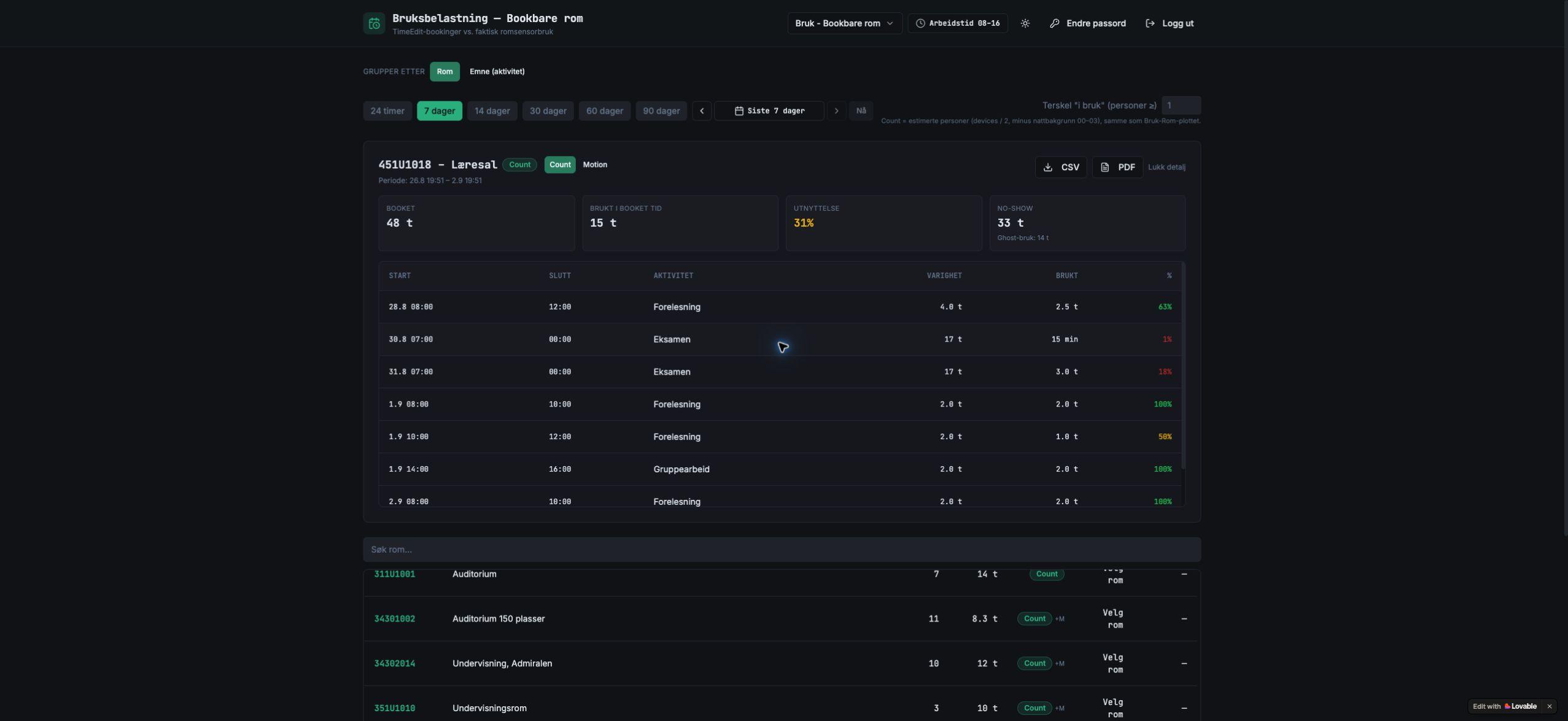
Operations and space management teams often encounter different versions of the same room. The booking system describes the plan, sensors record activity and indoor climate, while facilities management and building information modelling (BIM) systems describe the room’s identity and properties.
Planned and actual use in one view
In the Smart Campus platform, datasets are linked to stable identities for buildings, floors and rooms. For rooms with connected data, SC Insight can bring TimeEdit bookings together with estimated room use based on sensor data. This is a starting point for investigating possibilities in operations and space management, while work on the data foundation and its use continues.
Bringing the data together can help investigate when rooms are used and where plans and recorded activity differ. It can provide a basis for questions about capacity, timetabling, data quality and the suitability of rooms. Whether the analyses lead to better use of space needs to be assessed through testing and follow-up of measures.
Indoor climate provides essential context
Temperature and CO₂ should be assessed alongside actual use. A change in readings does not necessarily mean the same thing in a full teaching room as it does in an empty one. The workspace makes it easier for specialists to compare several signals before drawing a conclusion.