
Digital twin ·
A neighbourhood of digital twins in Azure
Smart Campus NMBU connects building data in a shared data layer, allowing information about rooms, sensors and technical systems to be used across sources.
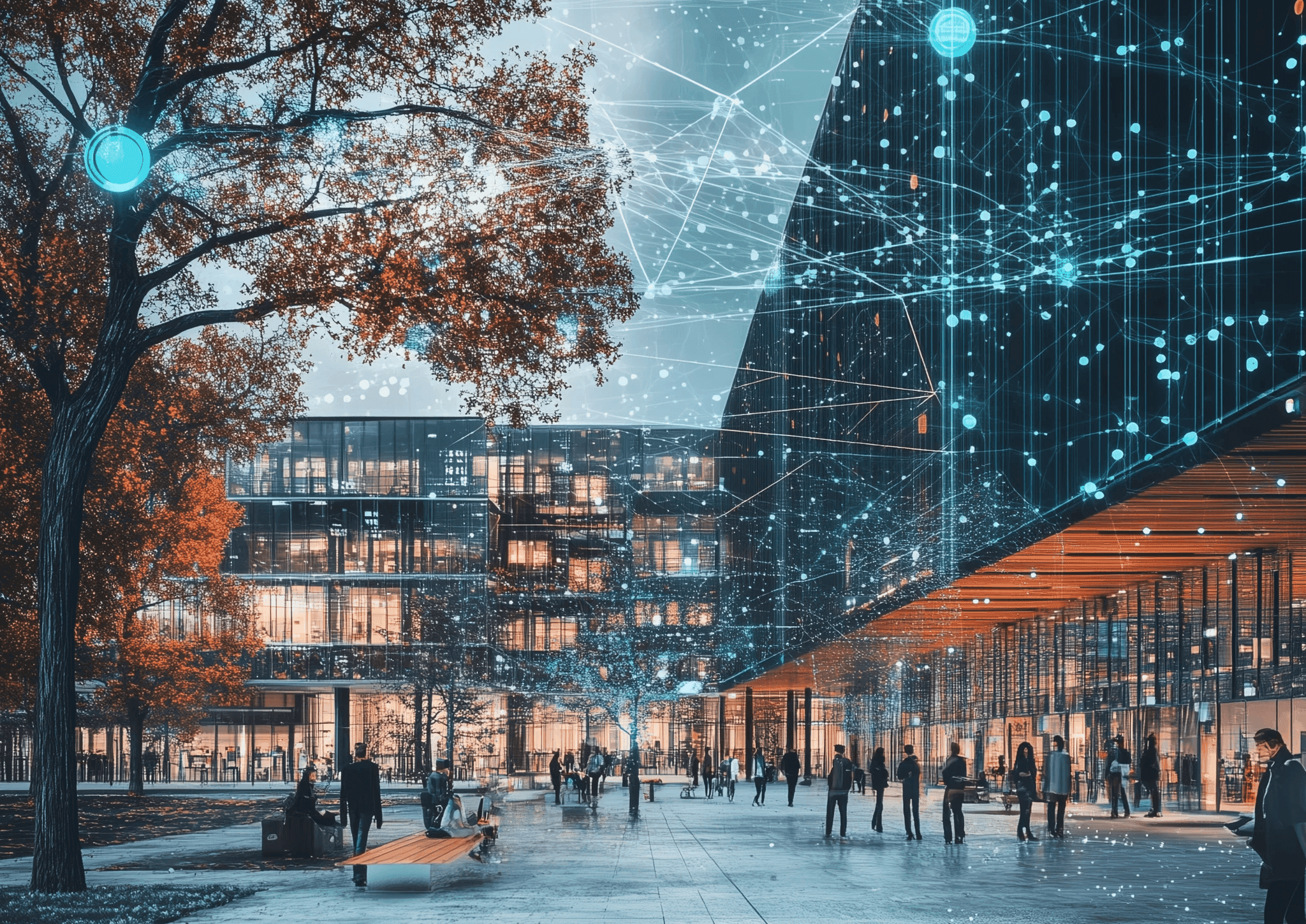
A room can appear in several systems that do not share data. Smart Campus NMBU connects these sources in an independent data layer in Azure. This summary presents the architecture as described in December 2024.
A shared language for building data
The RealEstateCore and Brick data models give the sources a shared language. Azure Digital Twins connects buildings, floors, rooms and sensors in a graph of digital twins. Information from different systems can then be linked to the same room.
The twins hold the latest known state, while Azure Data Explorer retains the history. This provides a foundation for examining both conditions and changes over time.
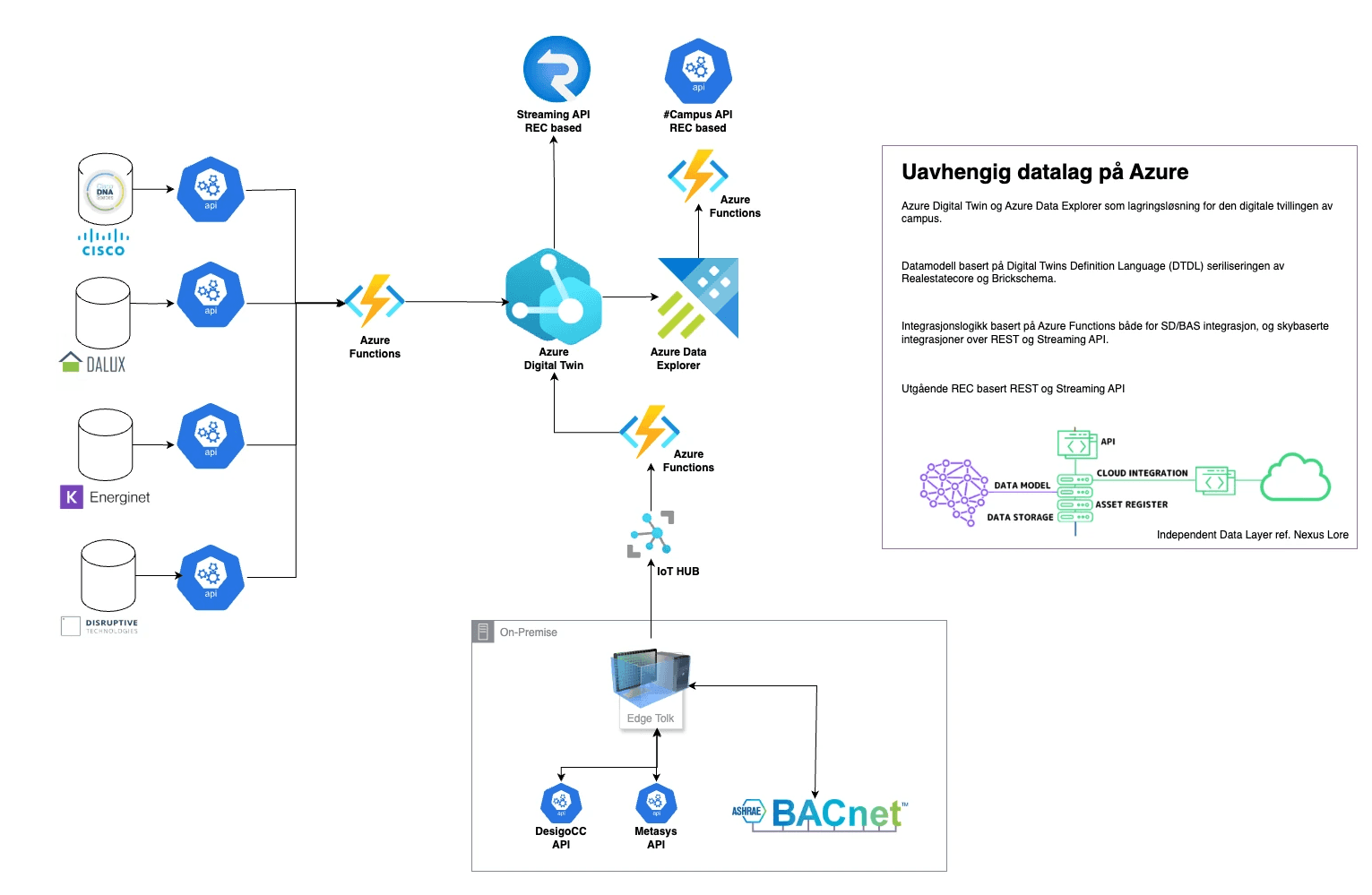
The architecture connects source systems, digital twins, historical data and APIs. Diagram from Skogli digital, with Norwegian annotations.
Open the full-size architecture diagram (in Norwegian).
Data for wider use
Standardised application programming interfaces (APIs) make data available for applications, analysis and student projects. The platform supports both queries through a REST API and streamed updates via SignalR.
Other campuses can build on this approach: connect sources through a shared model and make data reusable. Its value still depends on data quality, context and professional judgement.